
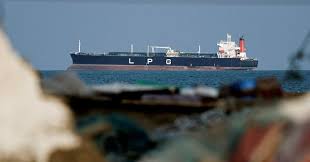
Is the world truly facing an energy crisis, or is the situation being amplified by financial markets and speculation? A closer look at the numbers suggests that the reality may be far less dramatic than headlines imply.
At the center of current concerns is the Middle East, particularly the risk of disruptions around the Strait of Hormuz. Several key oil producers in the region are often cited as critical to global supply. Iran produces around 4 million barrels of oil per day, Iraq another 4 million. Kuwait contributes approximately 2 million barrels, Qatar about 1.5 million, and the United Arab Emirates between 1 and 1.5 million barrels per day.
Combined, this amounts to roughly 16 million barrels per day potentially exposed to geopolitical tensions. At first glance, this figure appears significant. However, it represents only a fraction of global oil production.
The world currently produces approximately 96 million barrels of oil per day. Even if the entire 16 million barrels were disrupted — a highly unlikely scenario — around 80 million barrels per day would remain unaffected.
Moreover, not all major producers in the region are equally vulnerable. Saudi Arabia, for example, produces around 10 million barrels per day but has alternative export routes via pipelines to the Red Sea, bypassing the Strait of Hormuz entirely. Oman, located outside the strait in the Indian Ocean, is also largely unaffected by potential disruptions in that chokepoint.
Another critical factor is the United States. Despite being geographically distant from the Middle East, the U.S. produces approximately 25 million barrels of oil per day. This level of production not only covers domestic demand but also allows for exports of roughly 7 million barrels daily.
This raises an important question: if the majority of global supply remains intact, and major producers like the United States are largely insulated, why are markets reacting so strongly?
The answer may lie less in physical shortages and more in market psychology. Energy prices are often driven by expectations, uncertainty, and speculative trading. Even the possibility of disruption can trigger sharp price movements, regardless of actual supply levels.
In this context, the narrative of a global energy crisis may be, at least in part, a reflection of financial market dynamics rather than an immediate physical shortage of oil.
While geopolitical risks should not be dismissed, the data suggests that the global energy system retains significant resilience. The real question, therefore, is not only how much oil is at risk — but how much of the perceived crisis is driven by perception rather than reality.