

Crude oil markets experienced intense volatility between March 8 and March 12 as traders reacted to escalating geopolitical tensions, threats to global oil shipping routes, and emergency supply measures from major consuming nations.
The week saw both benchmarks swing sharply as the market tried to price in the risk of a major supply disruption in the Middle East. In recent trading, West Texas Intermediate (WTI) crude has been fluctuating in the range of approximately $95–105 per barrel, reflecting continued uncertainty and rapid sentiment shifts driven by geopolitical developments.
At the center of price volatility remains growing concern over oil flows through one of the world’s most critical energy corridors.
Weekly Light Crude Oil Futures
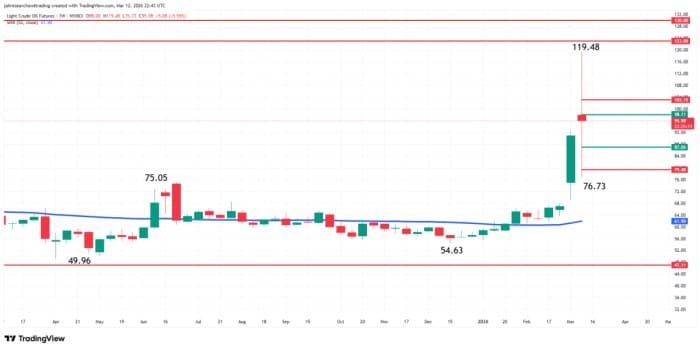
Strait of Hormuz Threats Ignite Supply Fears
The biggest driver of the market has been the escalating conflict involving Iran and growing threats to shipping through the Strait of Hormuz.
The waterway handles roughly a fifth of the world’s seaborne oil supply, making it one of the most sensitive choke points in global energy markets. Reports of rising tensions have increased fears that shipments through the Strait could be disrupted, leading traders to factor in the risk of supply interruptions.
Concerns intensified following reports of attacks on vessels and energy infrastructure in the Gulf region. Any indication that the Strait could be restricted or closed has immediate implications for global supply expectations.
Attacks on Energy Infrastructure Add to Market Anxiety
Beyond shipping concerns, physical energy infrastructure has also become a key focus for traders.
Reports of strikes targeting fuel facilities and disruptions to tanker activity have reinforced fears that the conflict could expand beyond isolated incidents. Each new development raises uncertainty about whether exports from major Middle Eastern producers can continue without interruption.
Even the possibility of temporary outages has contributed to tighter supply expectations and increased price volatility.
IEA Signals Supply Risks
The International Energy Agency (IEA) has warned that escalating tensions in the region could significantly impact global oil supply.
While exact figures remain uncertain, analysts suggest that any disruption involving key Gulf producers or transit routes could remove a meaningful share of daily global supply, placing upward pressure on prices.
The IEA has also indicated that geopolitical risks could limit supply growth, keeping the oil market tighter than previously expected.
Strategic Reserve Releases Attempt to Calm Markets
In response to rising prices, governments have signaled readiness to use strategic reserves to stabilize markets if needed.
Past coordinated releases by major economies have shown that such measures can provide short-term relief. However, traders remain cautious, as reserve releases do not address underlying geopolitical risks or long-term supply constraints.
Market Volatility Reflects Uncertain Outlook
Oil prices are currently being driven more by geopolitical developments than by traditional supply and demand fundamentals.
Every new report of military escalation, tanker disruption, or infrastructure damage continues to trigger rapid price movements in both Brent and WTI crude.
As long as tensions persist in the Middle East, oil markets are likely to remain highly sensitive to new information and prone to sudden volatility.
👉
A fresh wave of Houthi attacks on Israel over the weekend is raising new concerns ahead of the trading week. As markets reopen, investors are watching closely: will energy prices surge again, and how volatile will the coming days become? 🔥